Painting cabinets is easily one of the most dramatic and cost-effective ways to refresh a kitchen or bathroom. It’s fast, clean, and far less expensive than ripping out and replacing perfectly functional cabinetry. But there’s a catch. Painting cabinets is also one of the most technically demanding projects in residential finishing, requiring the right tools, primers, paints, and environmental controls. And when mistakes happen? They show. Every time you open a door, run your hand along an edge, or wipe a surface.
For homeowners in Helix Painting’s service area of Parker, CO, the difference between a flawless cabinet painting project and a disappointing one often comes down to 10 extremely common—but extremely avoidable—errors. Whether you’re planning to hire a professional or considering handling the transformation yourself, this detailed guide will walk you through the science, systems, and strategies behind painting cabinets correctly from the start.
Why This Guide Matters
A well-executed cabinet painting project can last 8–10 years. A poorly executed one might last 8–10 weeks.
Most failures trace back to the same mistakes: inadequate prep, wrong primers, wrong paints, rushed curing, or uncontrolled conditions. When you understand the technical steps, products, and drying cycles involved, you’re in a better position to avoid costly do-overs—or to hire the right professional who won’t make those mistakes in the first place.
And if you’re comparing services or costs, understanding the technical differences matters just as much as understanding broader exterior painting cost factors that also apply to cabinetry.
Let’s break down the most expensive errors homeowners make when painting cabinets—and how to prevent each one.
1. Skipping Proper Cleaning and Degreasing
Cabinets are grease magnets. Even cabinets that look “clean” are coated with a combination of airborne oil, fingerprints, cooking residue, silicone cleaners, and airborne contaminants. Paint does not stick to grease, and primer won’t either.
Professionals degrease cabinets before sanding.
DIYers often sand first—which grinds grease into the wood and makes adhesion even worse.
Why Cleaning Matters
-
Grease creates microscopic barriers that prevent primers from bonding.
-
Oil and silicone residues cause fish-eyes, bubbling, or flaking.
-
Incorrect cleaning leads to adhesion failure within weeks.
What Pros Use
-
TSP substitute
-
Krud Kutter Deglosser
-
Simple Green Industrial Degreaser
Cabinet painting is never successful without this first step, and it is the most common reason homeowners struggle with painting cabinets effectively.

2. Using the Wrong Paint for Cabinets
Wall paint is not cabinet paint. Wall latex is soft, flexible, and designed for broad surfaces. Cabinets, by contrast, demand hardness, chemical resistance, moisture resistance, and leveling properties.
Best Paint Types for Painting Cabinets
Professional cabinet painting systems use:
-
Alkyd enamels
-
Acrylic-alkyd hybrids
-
Urethane-modified waterborne enamels
These paints level out flawlessly, cure hard, and resist fingerprints, impact, and moisture.
Pro-Grade Products
-
Sherwin-Williams Emerald Urethane Trim Enamel
-
Benjamin Moore Advance
-
PPG Break-Through
These coatings are engineered for high-touch surfaces—doors, drawer fronts, corners, and edges that endure daily impact.
3. Skipping Sanding — The #1 Reason for Peeling Paint
Even the best “bonding primers” don’t eliminate the need for sanding.
When painting cabinets, sanding creates a mechanical bond. Without sanding, primers sit on top of the surface instead of gripping it.
Professional Standard
-
Sand all surfaces with 120–220 grit
-
Vacuum thoroughly
-
Wipe clean with tack cloth
Professionals use orbital sanders, Festool dust extraction systems, and anti-static setup to keep dust from settling back onto surfaces.
A properly sanded cabinet door feels matte—not shiny. That matte texture is what allows primers to bond.
4. Using the Wrong Primer
Primer selection is everything when painting cabinets. One wrong choice can cause:
-
Staining
-
Tannin bleed
-
Peeling
-
Yellowing
-
Poor enamel adhesion
Best Primer Types
-
Zinsser BIN Shellac: Best for oak and tannin-rich woods
-
INSL-X STIX: Best bonding primer for laminate or factory finishes
-
Oil-blocking primers: For older cabinets exposed to years of oily cleaners
Primer compatibility must match both the surface and the topcoat. This is where pros excel—and where DIY often fails.
5. Not Labeling Doors, Drawers, and Hardware
A cabinet system has dozens of doors, drawers, hinges, screws, and bumpers.
When DIY painters skip labeling, reassembly becomes chaos.
What Pros Do
-
Every door is labeled discreetly
-
Every hardware bag is numbered
-
A map is created for reinstallation
-
Doors are handled minimally after painting
One wrong hinge or screw can damage freshly painted enamel—which takes weeks to cure fully. When painting cabinets professionally, organization is essential.
6. Rushing Dry Times and Cure Cycles
Painting cabinets has two clocks:
-
The dry clock—how long before you can recoat
-
The cure clock—how long before the paint becomes fully hard
Homeowners often think “dry to touch” equals “ready to use.” It does not.
Typical Cure Times for Cabinet Paints
| Paint Type | Recoat Time | Dry to Touch | Full Cure Time | Notes |
|---|---|---|---|---|
| Acrylic-Alkyd Hybrid | 4–6 hours | ~1 hour | ~14 days | Great balance of hardness + low VOCs |
| Urethane Enamel | 6–8 hours | 2 hours | 21–30 days | Highest durability and gloss retention |
| Waterborne Alkyd | 3–5 hours | ~1 hour | 10–14 days | Smooth leveling, easy application |
Reinstalling doors early leads to sticking, imprint marks, peeling at edges, or fingerprints permanently embedded into the enamel. Professional cabinet painting contractors use temperature-controlled curing environments to ensure the finish reaches maximum hardness.
7. Painting in the Wrong Temperature or Humidity
Cabinet coatings need tightly controlled conditions to perform correctly.
Ideal Conditions
-
60–80°F temperature
-
40–60% humidity
-
Virtually no dust
When humidity is high, paint sags.
When it’s too cold, it won’t level.
When dust is present, it dries into the finish.
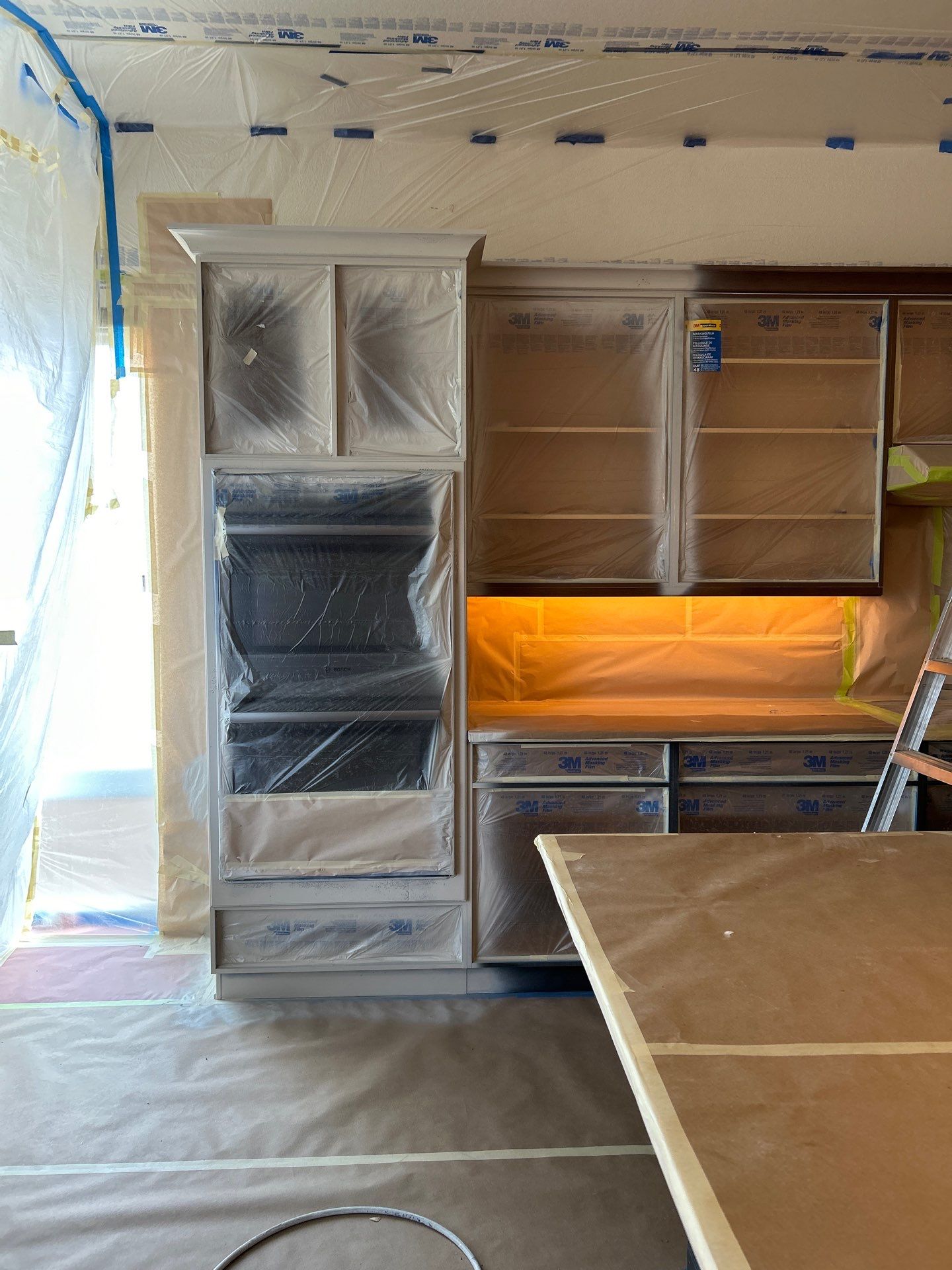
Experts often remove cabinet doors and finish them off-site for this reason. A controlled shop environment produces the ultra-smooth, factory-grade finish homeowners expect when painting cabinets.
8. Using Brushes Instead of Professional Sprayers
Brushes leave tracks. Rollers leave micro-texture.
Sprayers do not.
A major difference between DIY and professional cabinet painting is spray equipment. HVLP sprayers create a fine mist that settles evenly and levels out into a smooth, furniture-quality surface.
Why Spraying Is Superior
-
Glass-smooth finish
-
No brush marks
-
Better control over film thickness
-
Precise edge coverage
-
Even application on complex profiles
Products like Benjamin Moore Advance or Emerald Urethane are engineered to spray beautifully—but only in the right hands.
9. Skipping a Protective Topcoat in High-Wear Areas
Not all cabinets need a clear topcoat—but many do.
Kitchens in particular expose cabinets to:
-
Steam
-
Grease
-
Abrasion
-
Cleaning chemicals
-
Temperature swings
A clear waterborne polyurethane or urethane topcoat adds hardness and cleanability.
When Topcoats Are Essential
-
Light-colored cabinets
-
High-traffic homes
-
Cabinets near dishwashers and sinks
-
Rental units
Painting cabinets without topcoat protection in these zones results in premature wear.
10. Choosing the Wrong Color or Sheen
Lighting, shadows, undertones, surface imperfections—everything becomes more visible when painting cabinets.
Technical Considerations
-
Matte: Shows stains and fingerprints
-
High-gloss: Highlights every sanding scratch
-
Satin/Semi-Gloss: Industry standard for durability + beauty
Professionals test samples in your actual lighting—not store lighting. This avoids costly regrets and unnecessary repaints.
Common Questions About Painting Cabinets
1. How long should cabinet paint last?
With proper prep, sanding, priming, and pro-grade coatings, 7–10 years is typical.
2. Is cabinet painting cheaper than replacing?
Usually 30–50% cheaper, while delivering a similar visual upgrade.
3. Can you paint over laminate cabinets?
Yes—but only with adhesion testing and a true bonding primer.
4. Do I need to remove doors before painting?
Absolutely. It’s impossible to achieve full coverage or avoid edge build-up otherwise.
5. How can I choose safer, greener cabinet paints?
Look for products certified through ecolabels on paint and standards on greener products before selecting a coating system.
Conclusion
Painting cabinets can transform a room. But it only works when the process is technical, systematic, product-accurate, and controlled. Each of the 10 mistakes outlined above is avoidable — and when you avoid them, you get the smooth, durable, beautiful finishes homeowners want.
With the right prep, primers, enamel systems, drying cycles, and spray techniques, painting cabinets becomes one of the highest-ROI upgrades available. Whether you tackle it yourself or partner with Helix Painting, you now have the knowledge to ensure your cabinet painting project delivers long-lasting, professional-grade results.